
You open a link on your phone. No app store, no download, no sign-up. Within seconds you're walking through the virtual halls of the Metropolitan Museum of Art, solving challenges to unlock works, and even placing some as augmented reality in your own living room. All of it runs in the ordinary browser you already have.
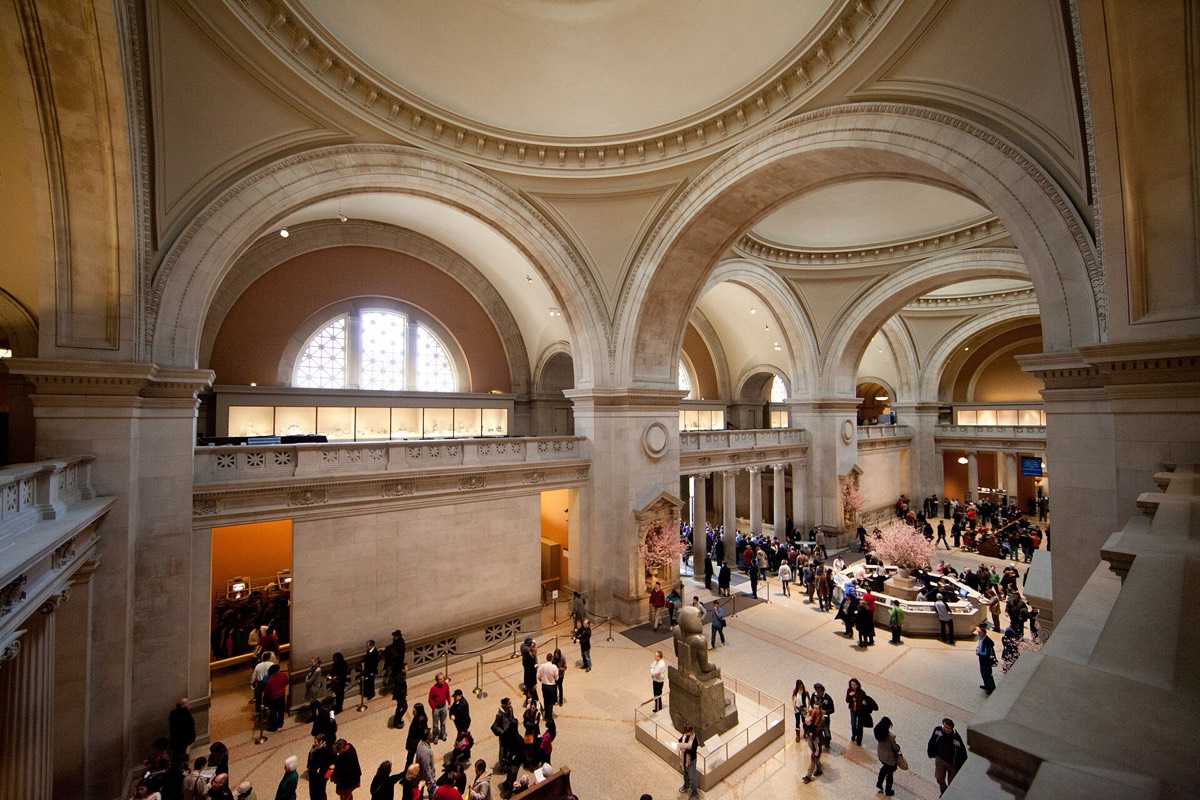
This was The Met Unframed — a project the Metropolitan Museum ran in 2021 in collaboration with Verizon, lasting roughly a month. Its most important decision wasn't the content, but the delivery: nothing had to be installed.
The experience combines two things rarely found together — a virtual gallery and a game. The visitor walks through the spaces, explores selected works from the collection and solves small challenges beside them. A solved challenge "unlocks" an artwork, adding a sense of progress and a reason to continue — gamification that works not on childishness but on curiosity.
The highlight is take-home AR: selected artworks can be placed through the camera into your real space and viewed at true scale. The museum comes to you, not only you to it — and without a single downloaded file.
The technical core is WebAR — augmented reality that runs directly in the browser, with no native app. The Met Unframed was built on the 8th Wall platform, which enables this, combined with WebGL for real-time 3D rendering inside a web page.
The consequence of this choice is large: any app that has to be downloaded loses a big share of visitors at the threshold — at the store, the update, the permissions. The web removes that threshold. One link, one tap, the experience loads. This isn't a minor technical detail; it's the difference between "many people tried it" and "most gave up at install".
The effect rests on three things. First, the barrier is a link: with no store and no download, the main reason for drop-off disappears. Second, gamification gives direction: unlocking works creates a path through the content, not just a pile of information. Third, take-home AR extends the museum's space into the visitor's home, prolonging contact beyond the visit.
For a regional museum, "no app" is almost always the right choice — and the Met proves it at the highest level. A progressive web app (PWA) or WebAR experience opens via a link or QR at the entrance, runs on every modern phone, and asks the visitor to install nothing.
The practical benefits are direct: no maintaining two separate native apps for iOS and Android, no waiting for store approvals, no nagging about updates. Content is updated on the server and is instantly available. For a museum with a small team, that is the difference between a sustainable system and a burden.
And: the European Accessibility Act (EAA) has applied since June 2025. Because WebAR is the web, accessibility is achievable with the same standards as for a website — WCAG 2.1 AA, screen reader, contrast, keyboard — if it's built in from the start.
Is WebAR worse than a native app? For most museum cases, no. Modern WebAR handles 3D, tracking and placement in space; in return you get a zero install barrier, which at the point of visiting often outweighs the rest.
Does it work without internet? A WebAR experience can be designed as a PWA that loads on the first visit and then runs offline — important for stone halls with dead zones.
Do we need a Verizon budget like the Met? No. The Met built a top-tier showcase. A regional museum starts with one web experience tied to a key collection and grows as needed.
How many languages? As standard, Slovenian, English, German, Italian and Croatian, with AI speech synthesis.
This study is part of the Museum AI playbook — 8 digital experience patterns that work.
Want an experience the visitor opens with one tap, no download? Write to klemen@hopguides.art — let's talk.