You step into the rotunda of the National Museum of Singapore and begin descending a long spiral ramp. A forest moves around you — flowers bloom and fade, animals cross your path and vanish into the trees, day turns to night. Come back next week and the forest is different. Not similar. Different. Because no one filmed this scene — a computer is drawing it live, right now, for this minute only.
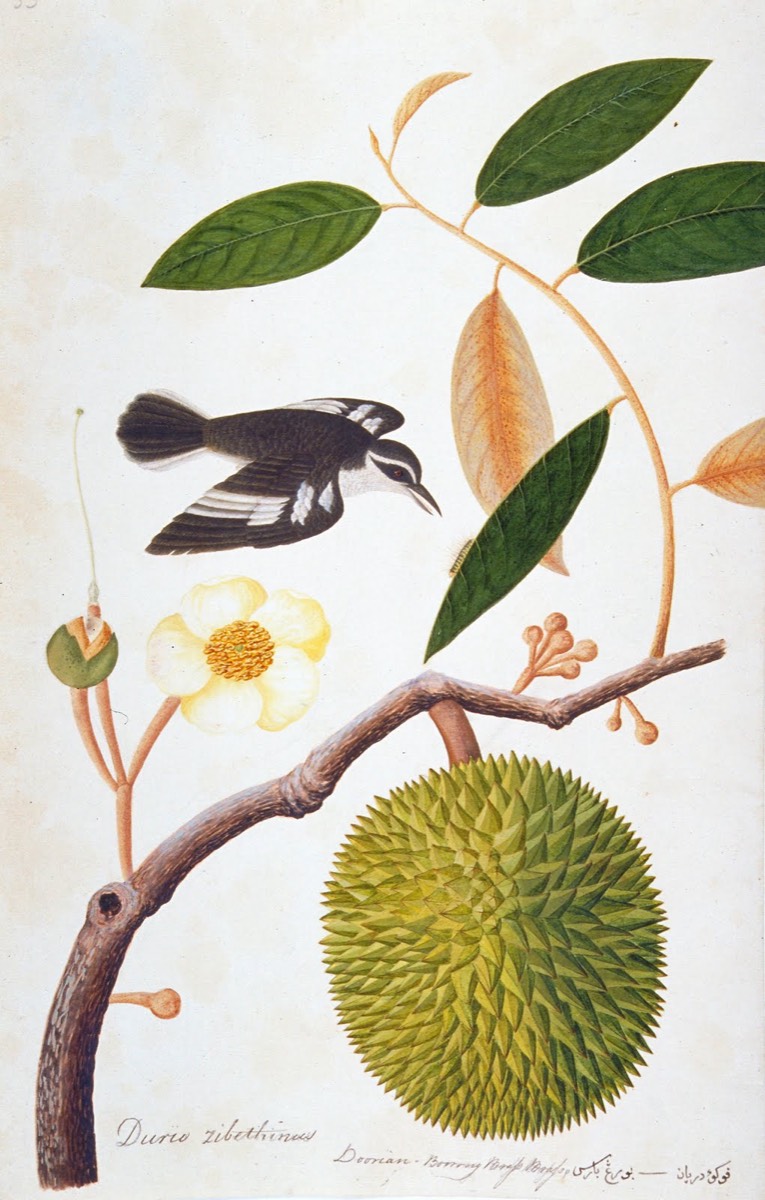
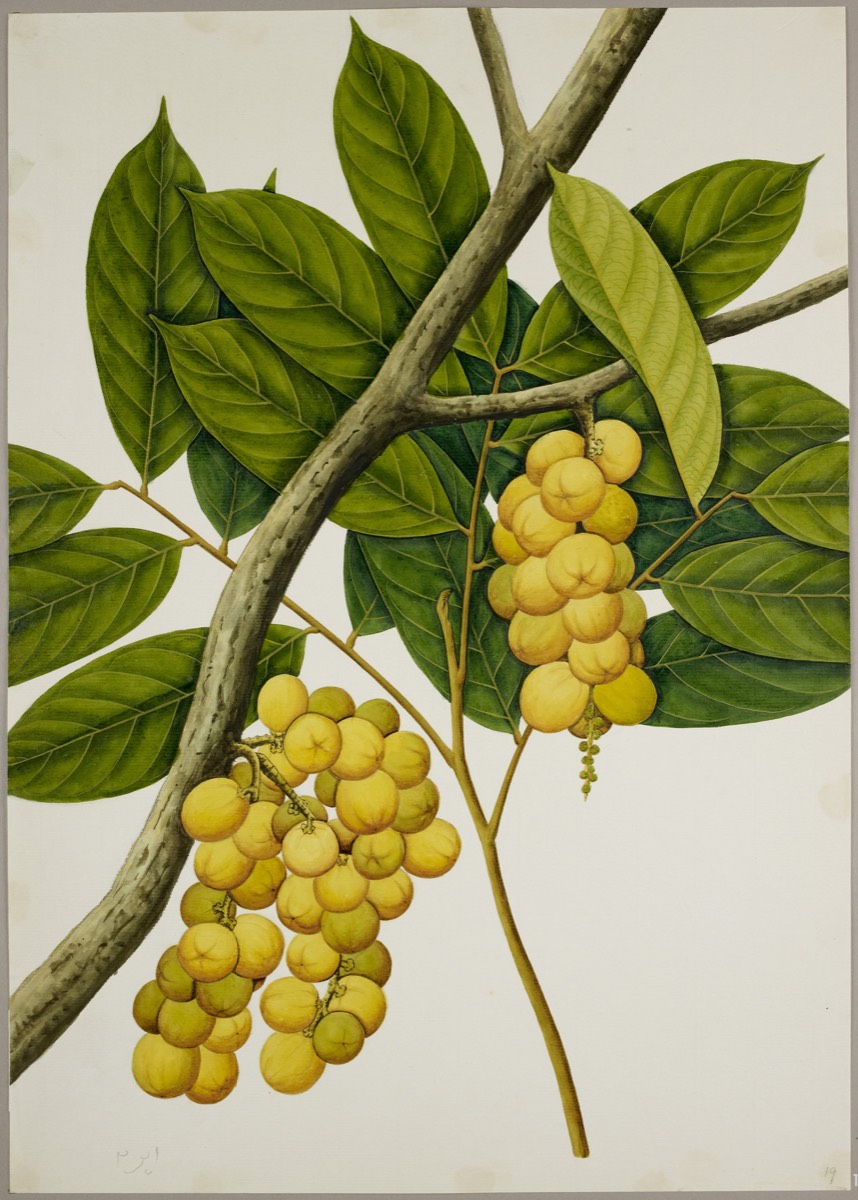
This is Story of the Forest, a permanent installation by the collective teamLab. The starting point isn't fantasy: 69 drawings from the historical William Farquhar Collection of Natural History Drawings, painted in the 19th century, were turned by teamLab into a three-dimensional, continuously shifting landscape roughly 170 metres long. Botanical illustrations that would otherwise sit in cases now grow across the walls.
The experience is physical, not on-screen. You walk through the projection rather than watch it from a distance. Insects and birds from Farquhar's drawings move through the space; if you pause, the scene responds; if you keep walking, you miss a moment that won't return in the same form. teamLab describes its work as existing in time — it isn't a picture, it's an event.
The point for a museum: the content is not a looping video. A loop repeats every few minutes and the visitor feels it. Here nothing repeats, and that absence of repetition is exactly what holds attention and invites a return visit.
The system runs on an array of projectors synchronised into a single seamless surface across the curved walls of the spiral ramp. The geometry is demanding — the projection has to land on a twisting, non-rectangular surface with no visible seams. This is projection mapping at architectural scale, not a flat screen.
The content is generative: instead of a pre-rendered film, the software produces motion in real time according to rules teamLab defined — when a flower blooms, how a flock moves, when night falls. That is precisely why it is never the same.
Here's the honest part. teamLab treats its generative engine as proprietary technology, and the details are not publicly documented. We won't guess what exactly runs under the hood — and that's deliberate. The credibility of a teardown lies in separating what is publicly known (projection mapping, real-time generation, the source drawings) from what is not (the engine's precise architecture).
The effect isn't in the number of projectors. It's in three decisions. First, the source is real: 69 documented historical drawings give the work a legitimacy pure animation would lack. Second, non-repetition is a feature, not a technical quirk — it strips away the sense of a "recording" and adds the sense of something alive. Third, the body is in the space: walking through the landscape makes you part of it.
Slovenian and Croatian castles have something Singapore had to build: stone halls with large, unbroken walls. These are natural canvases.
You don't need teamLab's budget. A generative 170-metre installation is the top of the market; a regional museum starts with one hall and one motif from its own collection — a herbarium, a historical map, a fresco. A modern approach pairs a few laser projectors with a media server for projection mapping and content that varies enough not to read as a loop. Even without full real-time generation, a long, randomly reshuffled sequence can produce the "never quite the same" feeling.
One thing must be built in from the start: the European Accessibility Act (EAA) has applied since June 2025. An immersive space must offer an alternative for visitors with vision or hearing impairments — an audio description of the sequence, a seating option, a clearly marked entry and exit. Built in, not bolted on.
Do we need a real-time generative engine like teamLab? Not to begin. A long, variable sequence over projection mapping delivers most of the effect at a fraction of the complexity. Generative real-time is an upgrade, not an entry requirement.
How many projectors? It depends on the size and shape of the walls. A single castle hall is often covered by three to six laser projectors and one media server; the exact number is set by surveying the space.
Does it work on curved, stone walls? Yes — that is precisely the advantage of projection mapping over a flat screen. Calibrating to a non-rectangular surface is a standard part of the install.
How many languages for accompanying content? As standard, Slovenian, English, German, Italian and Croatian, with AI speech synthesis.
This study is part of the Museum AI playbook — 8 digital experience patterns that work.
Have a hall that could become a landscape? Write to klemen@hopguides.art — we'll look at the space and tell you what's realistic.