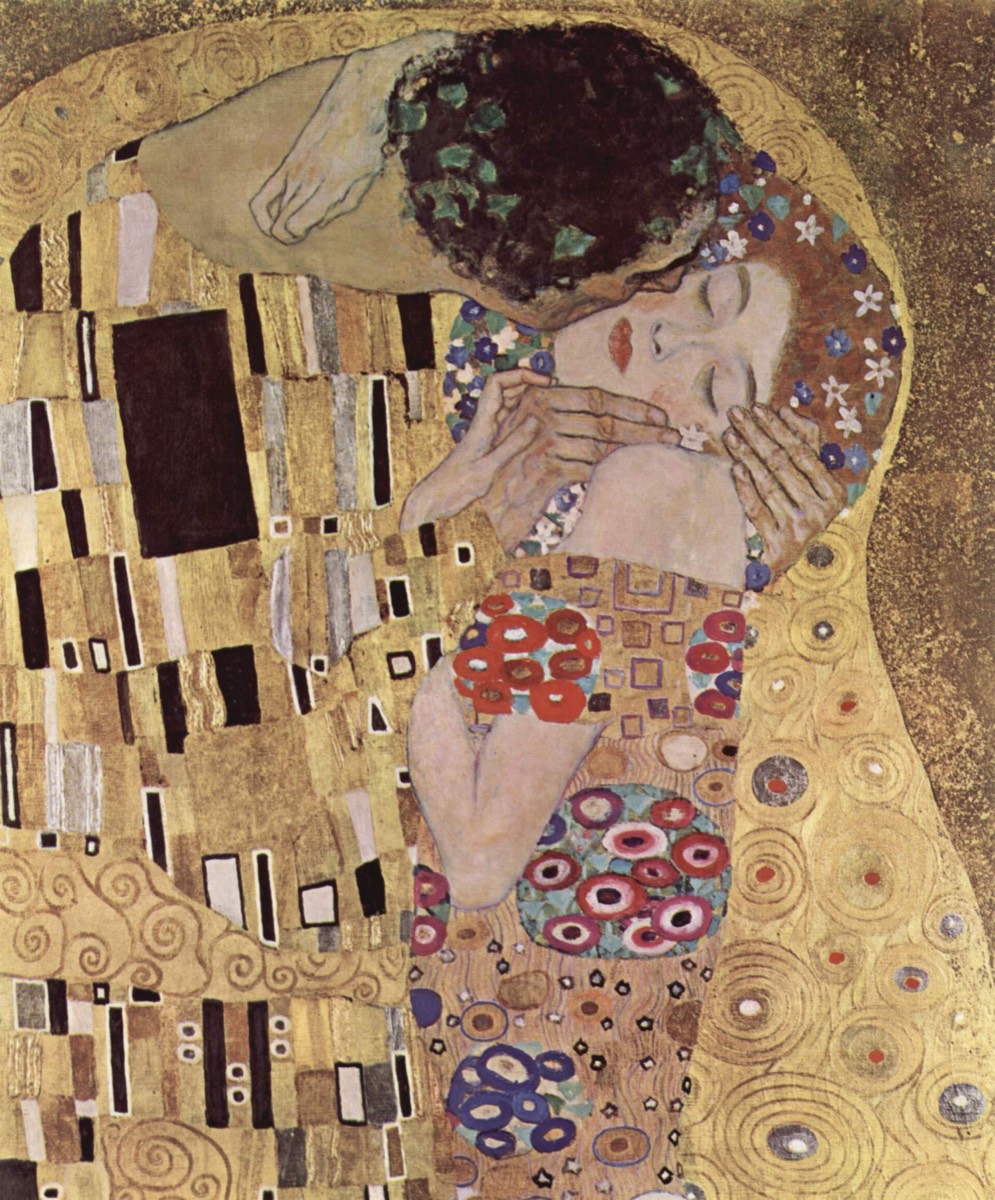
You enter an old Parisian iron foundry and the walls vanish. Klimt's gold spills across the whole hall — over the floor, the pillars, the ceiling, across your hands. Music fills the space. You aren't in front of a painting, you're inside it. The painting is now the size of a room, and you walk through it.
This is Atelier des Lumières, opened in Paris in 2018 by Culturespaces in the former Chemin-Vert foundry. Its first exhibition was devoted to Gustav Klimt. The format is called AMIEX® — Art & Music Immersive Experience — and rests on a simple but radical idea: take a masterpiece and enlarge it until it becomes a space.
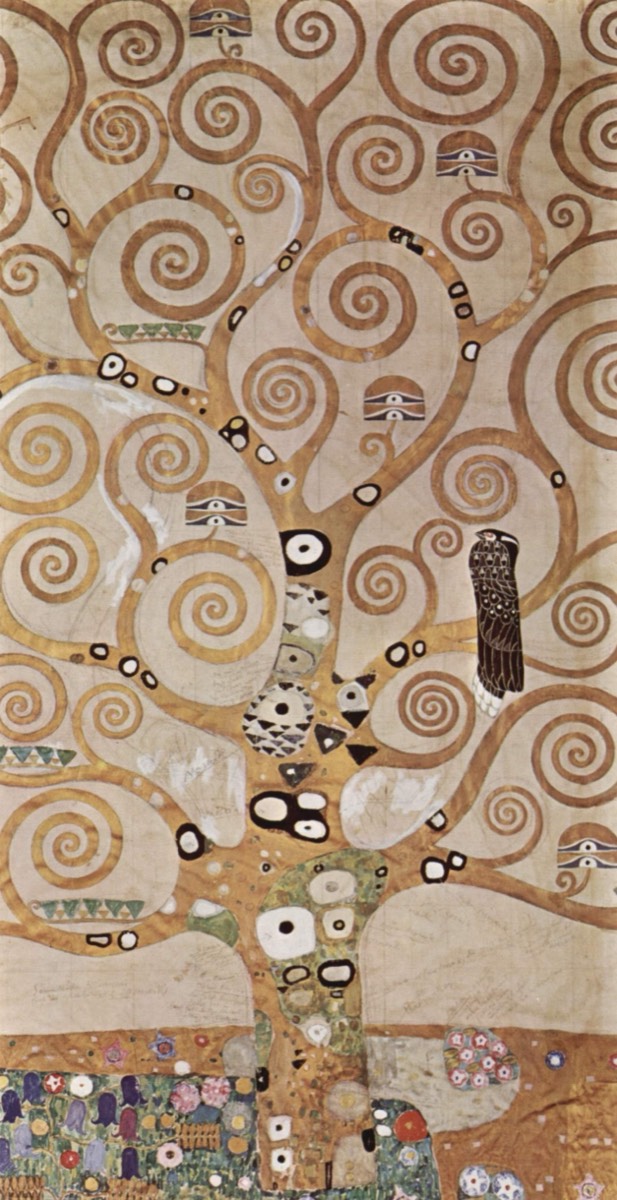
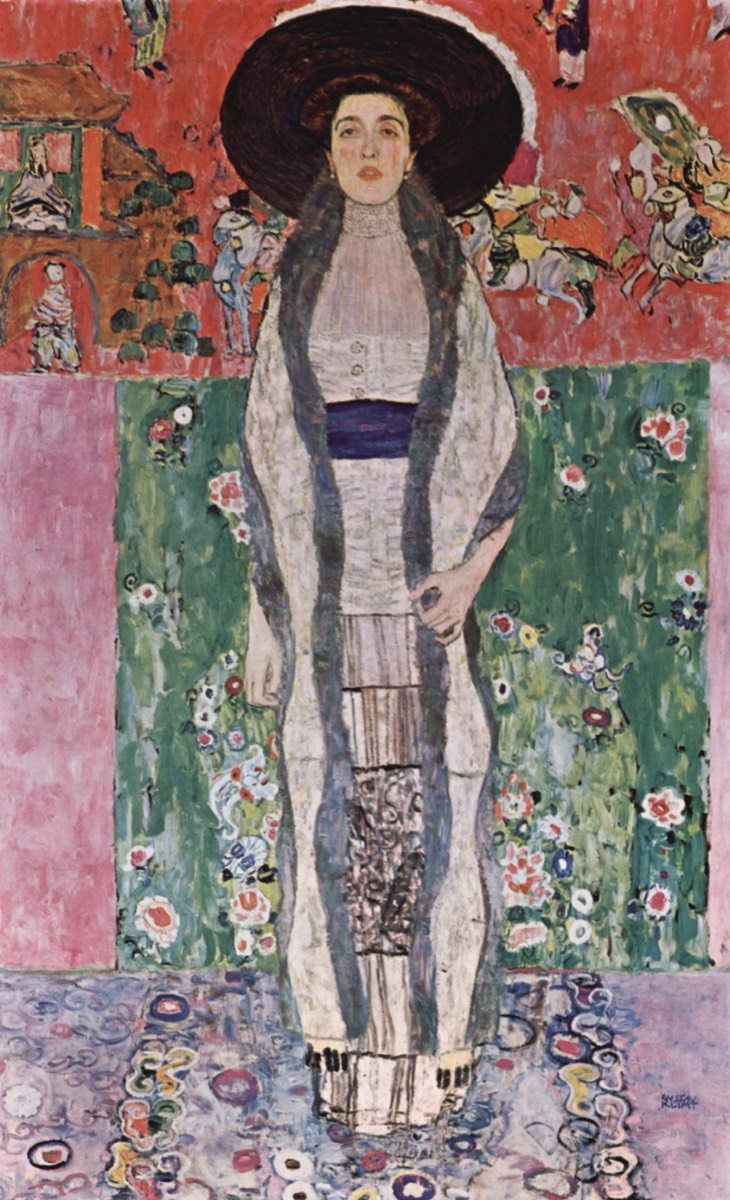
The experience is total immersion. The projection doesn't cover one wall, but every surface at once — the visitor stands in the middle of a moving painting that expands around and beneath them. Klimt's patterns move to the rhythm of the music; one motif dissolves into another; the space breathes.
There's no explanation, no labels, no timeline on a board. It's an emotional, almost physical contact with the art that a flat reproduction cannot give. The visitor doesn't "visit an exhibition" but spends 30 minutes inside the artist's world.
The scale is large. By publicly available figures, the space is driven by around 140 Barco video projectors that together cover all the walls, floor and ceiling in a single seamless surface. The content is synchronised by a system of media servers — around 35 Modulo Kinetic units — which ensures the projection lands across the vast, irregular geometry of the industrial space with no visible seams.
Crucially, the space wasn't built for this. It was a foundry — a raw, stone, industrial volume with high walls and hard surfaces. That very rawness is the advantage: large, unbroken wall surfaces are a natural canvas. Culturespaces didn't build a white box; it took an existing stone space and turned it into a projection hall.
The effect rests on three things. First, scale changes the relationship: when the painting becomes bigger than you, you're no longer a viewer but a participant. Second, music binds emotion: sound and image together work more powerfully than each alone. Third, the space is part of the work: raw stone walls aren't an obstacle, they're a co-star.
Here's a direct connection that can't be missed. Atelier des Lumières worked because a stone foundry is an ideal space — high walls, large surfaces, raw material. Slovenian and Croatian castles have exactly this. Stone halls that today often sit empty are, by nature, the same thing Culturespaces had to find and adapt in Paris.
You don't need 140 projectors. That's the top of the market for huge industrial volumes. A castle hall is smaller and is often covered by a few laser projectors with one media server for projection mapping. The content can be a single local story — bring a faded fresco back to life on the wall; spill a historical event tied to this castle across the hall. An empty stone space becomes a reason to visit, without building anything.
And: the European Accessibility Act (EAA) has applied since June 2025. An immersive projection must offer an alternative — a seating option, an audio description of the sequence, a clearly marked entry and exit, a warning about strong light effects. Built in from the start.
Do we need 140 projectors? No. That's the scale for a Parisian foundry. A castle hall is often covered by a few laser projectors with one media server; the exact number is set by surveying the space.
Does it work on raw, stone walls? Yes — and that's precisely the advantage. Large, unbroken stone surfaces are a natural canvas; projection mapping adapts to the irregular geometry.
What content do we project? A local story works most powerfully — a faded fresco, a historical event, a person tied to this castle — not a generic carousel of images.
How many languages for accompanying content? As standard, Slovenian, English, German, Italian and Croatian, with AI speech synthesis.
This study is part of the Museum AI playbook — 8 digital experience patterns that work.
Have an empty stone hall? That is exactly the space Atelier des Lumières proves out. Write to klemen@hopguides.art.