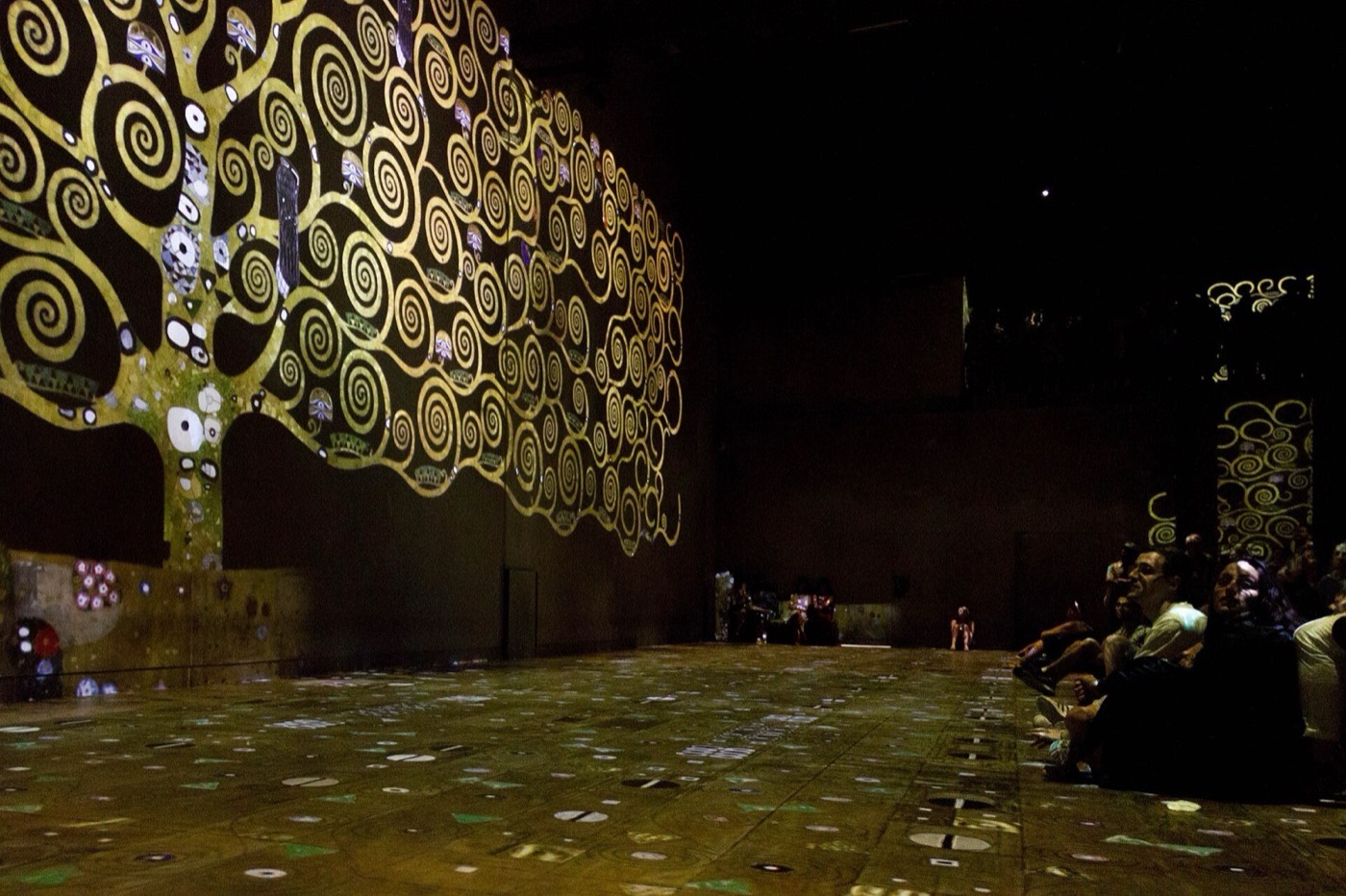
Every director knows this arithmetic. Loans, insurance, transport, installation, catalogue, marketing — all paid up front, all fixed. Against it stands a single box office, open for a few months. If the show succeeds, the cost is recovered once. If it fails, the loss cannot be repaired anywhere else. The exhibition as a one-off event is a bet with a single payout window.
Over the past decade the immersive category has shown this arithmetic is not the only one available. The same digital Van Gogh narrative played in dozens of cities at once; the Atelier des Lumières in Paris refills the same hall every season with a new projection built on the same digital foundations. The principle never changes: produce the expensive content once, sell it many times — in more cities, on more channels, over more years.
The turn is not in spectacle but in separating the cost of content from the cost of delivery. Scans, high-resolution photography, the script, the trailer film — these are assets created once. Every additional venue, licence or digital product reuses them at almost no extra cost. A classic exhibition recovers its fixed cost once; a portable format recovers it as many times as it opens venues and channels.
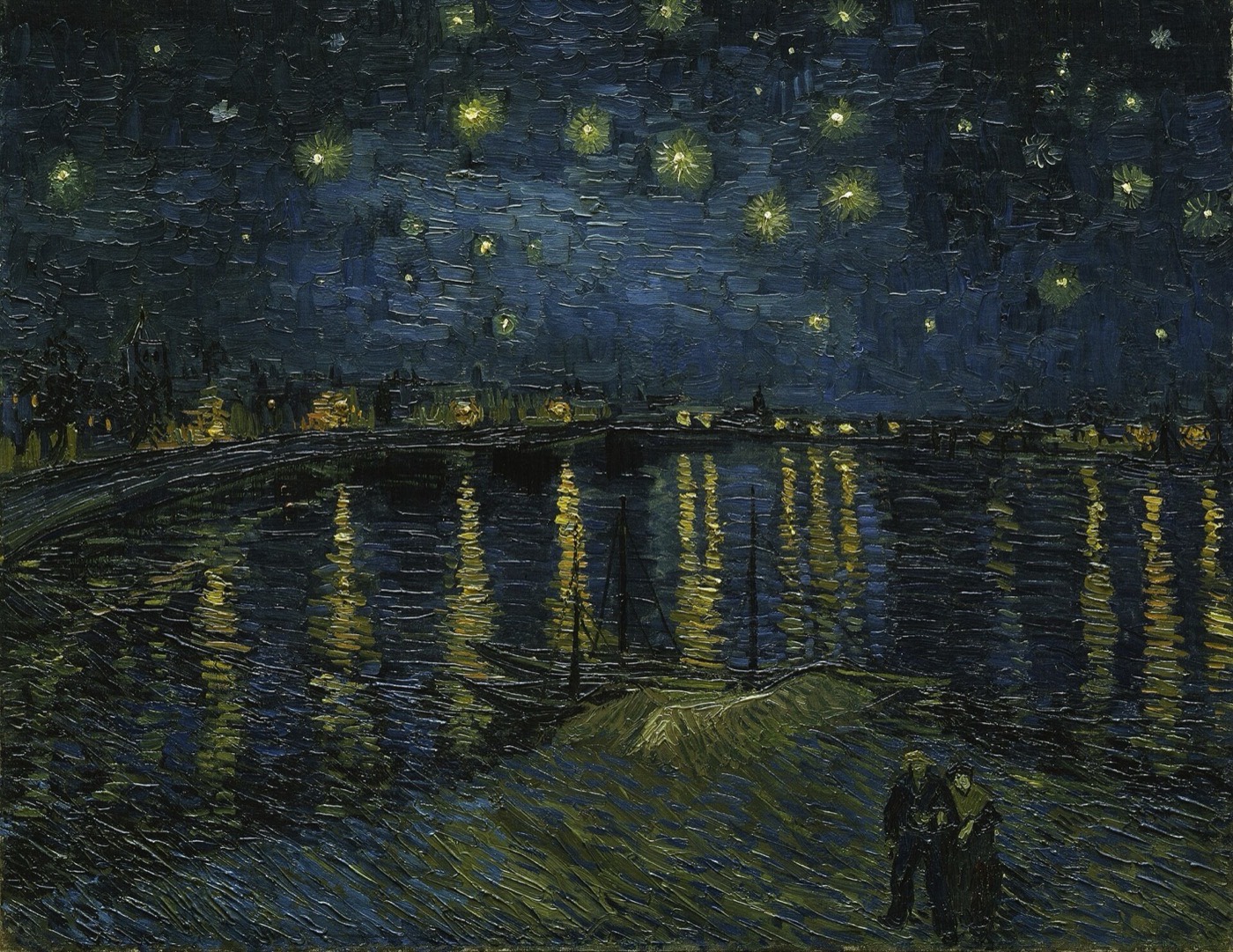
The story has a dark side, and it is the most instructive part for a director. Lighthouse Immersive — operator of one of the most successful Van Gogh productions — sought creditor protection under Canada's CCAA in July 2023 and filed a parallel Chapter 15 petition in Delaware. Millions of tickets sold did not prevent the financial distress: the market saturated, licensing disputes sharpened, venue costs stayed. The company restructured; it was not liquidated. The lesson is not that immersive does not work. The lesson is that the durable margin stays with whoever owns the format and the rights — not with whoever carries venue and marketing risk in every city.
For a museum this reduces to a single question in every co-production: who owns the story, the scans and the name once the show closes?
You do not need to be Paris. The regional version of the same principle: two or three related museums share the cost of digitisation and storytelling, and the format travels between them. Each partner gets a "new" exhibition for a fraction of the price, and the content pays for itself several times. The digital layer — an online exhibition, a school programme, licensed use of the material — keeps working even while the physical build rests in storage.

1. Does the story travel? If the exhibition is tied to objects that cannot leave the building, the digital layer travels instead.
2. Who owns the format? Script, scans, name, film — contractually yours, not the contractor's.
3. How many channels open on day one? Tickets are one channel. School programmes, licences, digital products and touring are the other four.
4. Does the budget book digitisation as an investment? Scans get used for a decade — that is not a documentation expense.
5. What remains after closing? If the answer is "a catalogue and memories", the format was never a product.
Does this mean every museum must build immersive projections? No. "One narrative, many venues" works for a modest touring build or a digital-only exhibition — spectacle is a choice, portability is the principle.
Does this devalue curatorial work? The opposite — the curatorial story becomes the central asset, worth funding better because it pays back more than once.
Where to start without a large budget? With one story and one object: digitise, write a short narrative, test it on visitors. Scale only after that.
This study is part of the Museum AI Playbook — 8 patterns of digital experience that work.
The capstone of this series: The Successful Exhibition Blueprint — 15 steps from idea to metrics.
Wondering whether your next show passes the "does it travel" test? Write to klemen@hopguides.art — we will prepare a free demo on your own material.